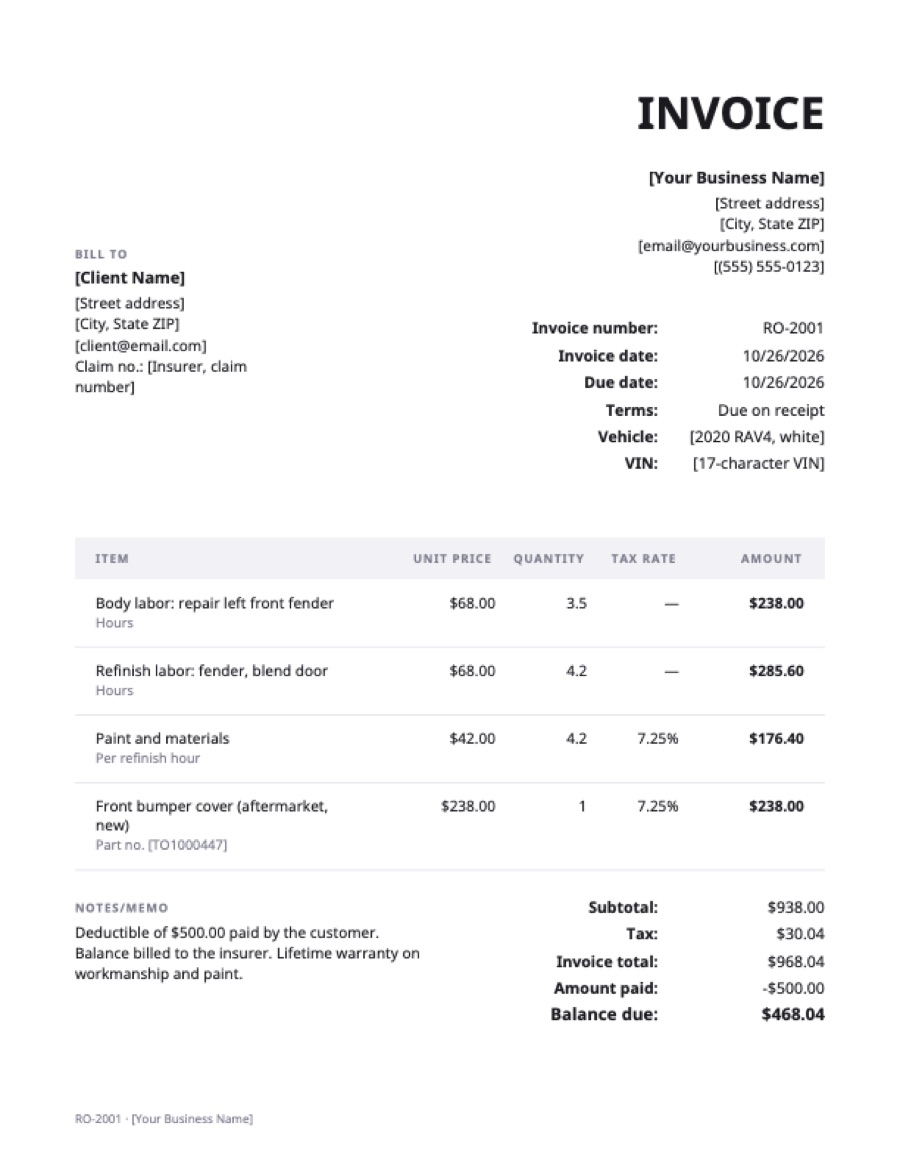
What’s on the auto body shop invoice template
Extra fields on this template: Vehicle, VIN, Claim no..
| Item | Qty | Rate | Amount |
|---|---|---|---|
| Body labor: repair left front fenderHours | 3.5 | $68.00 | $238.00 |
| Refinish labor: fender, blend doorHours | 4.2 | $68.00 | $285.60 |
| Paint and materialsPer refinish hour | 4.2 | $42.00 | $176.40 |
| Front bumper cover (aftermarket, new)Part no. [TO1000447] | 1 | $238.00 | $238.00 |
| Subtotal | $938.00 | ||
| Tax (7.25%) | $30.04 | ||
| Total | $968.04 | ||
| Amount paid | -$500.00 | ||
| Balance due | $468.04 | ||
Example prices in US dollars. Replace them with your own; in the generator, any currency works.
What a body shop invoice includes
- Vehicle, VIN and color, plus the insurance company and claim number.
- Labor by category: body, refinish (paint), frame and mechanical, each with hours and rate, matching the insurer’s estimate.
- Paint and materials, usually charged per refinish hour.
- Parts with part numbers, marked OEM, aftermarket or used. Many states require you to disclose non-OEM parts.
- Sublet work such as alignment or glass done by another shop.
- The deductible the customer pays, shown as a credit or as an amount already paid.
Working with insurance claims
Bill the insurer for the approved repair and the customer for the deductible and any upgrades they asked for. If you find more damage after teardown, get a supplement approved before doing the work and add it to the invoice with its own lines. Keep the invoice’s labor hours and parts consistent with the approved estimate, so payment isn’t held up.
Frequently asked questions
How do I show the deductible on the invoice?
Either issue the customer a separate invoice for the deductible, or show the full repair with the deductible as an amount already paid, so the insurer sees the balance they owe.
What are paint and materials charges?
Paint, primer, clear coat and consumables, usually billed at a rate per refinish labor hour agreed with insurers.
Do I have to say if a part is aftermarket?
In many states, yes: estimates and invoices must identify non-OEM (aftermarket) parts. Mark each part OEM, aftermarket or used.