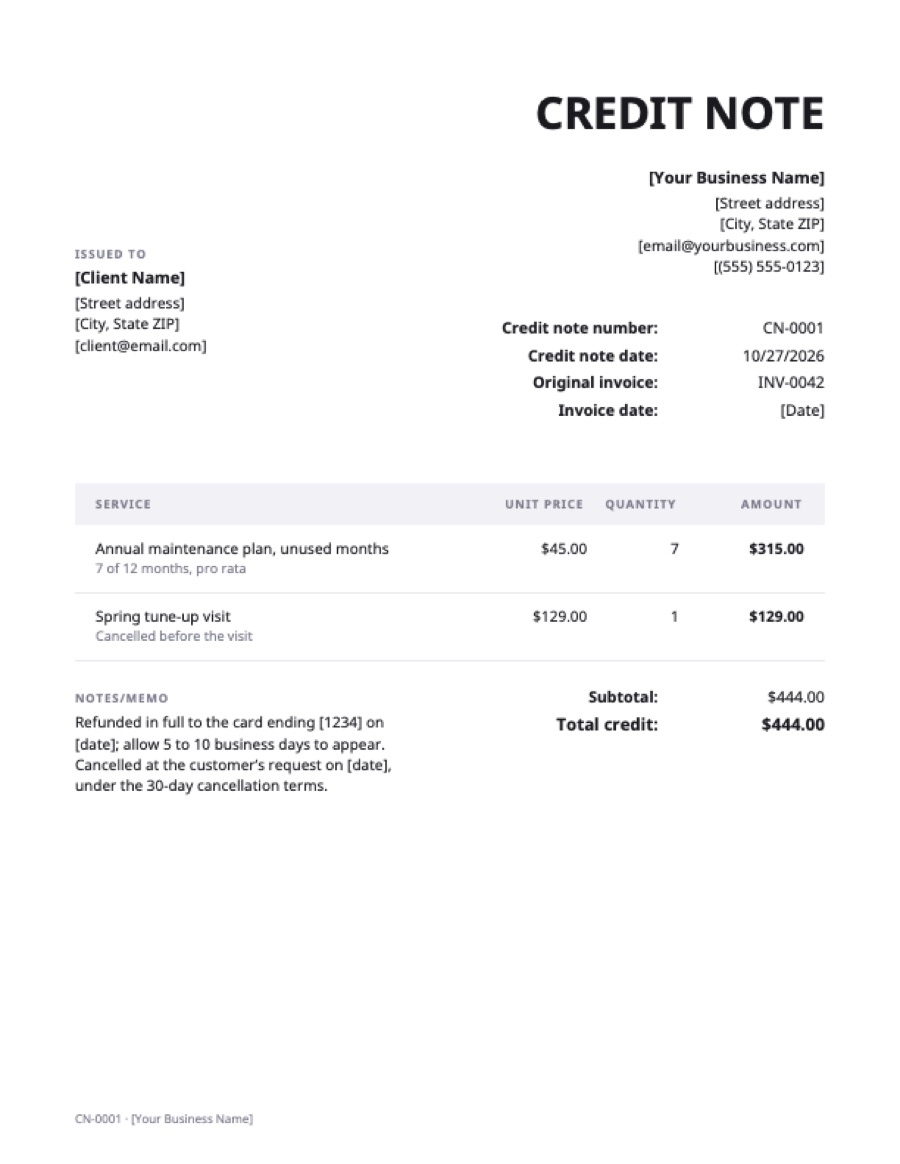
What’s on the refund credit note
Extra fields on this template: Original invoice, Invoice date.
| Service | Qty | Rate | Amount |
|---|---|---|---|
| Annual maintenance plan, unused months7 of 12 months, pro rata | 7 | $45.00 | $315.00 |
| Spring tune-up visitCancelled before the visit | 1 | $129.00 | $129.00 |
| Total credit | $444.00 | ||
Example prices in US dollars. Replace them with your own; in the generator, any currency works.
Refund or credit?
The credit note records that the customer no longer owes, or is owed back, an amount. What you then do with the money is a separate step: refund it (to the card, by bank transfer or by check) or, if the customer agrees, keep it as a credit against future invoices. Write which one on the credit note, and the date the refund was sent, so the customer can match it to their statement.
Refund to the way the customer paid where you can. Card networks generally expect card payments to be refunded to the same card.
Working out a partial refund
- Unused time: credit the unused months or days at the price paid per period, as the template does.
- Work partly done: credit the part not delivered and say what was delivered.
- Cancellation fee: if your terms allow one, add it as a negative line so the customer sees what was kept.
Frequently asked questions
Do I need a credit note to issue a refund?
For an invoiced sale, yes in practice: it is the record that reduces the invoice and the tax on it. Without one, your sales and the refund won’t reconcile.
What about payment processing fees?
Many card processors keep their fee on a refunded payment. That is your cost; don’t deduct it from the customer’s refund unless your terms say so.
Is a refund receipt the same thing?
A refund receipt confirms money was paid back. The credit note does that and also ties the refund to the original invoice; for invoiced sales it is the better record.