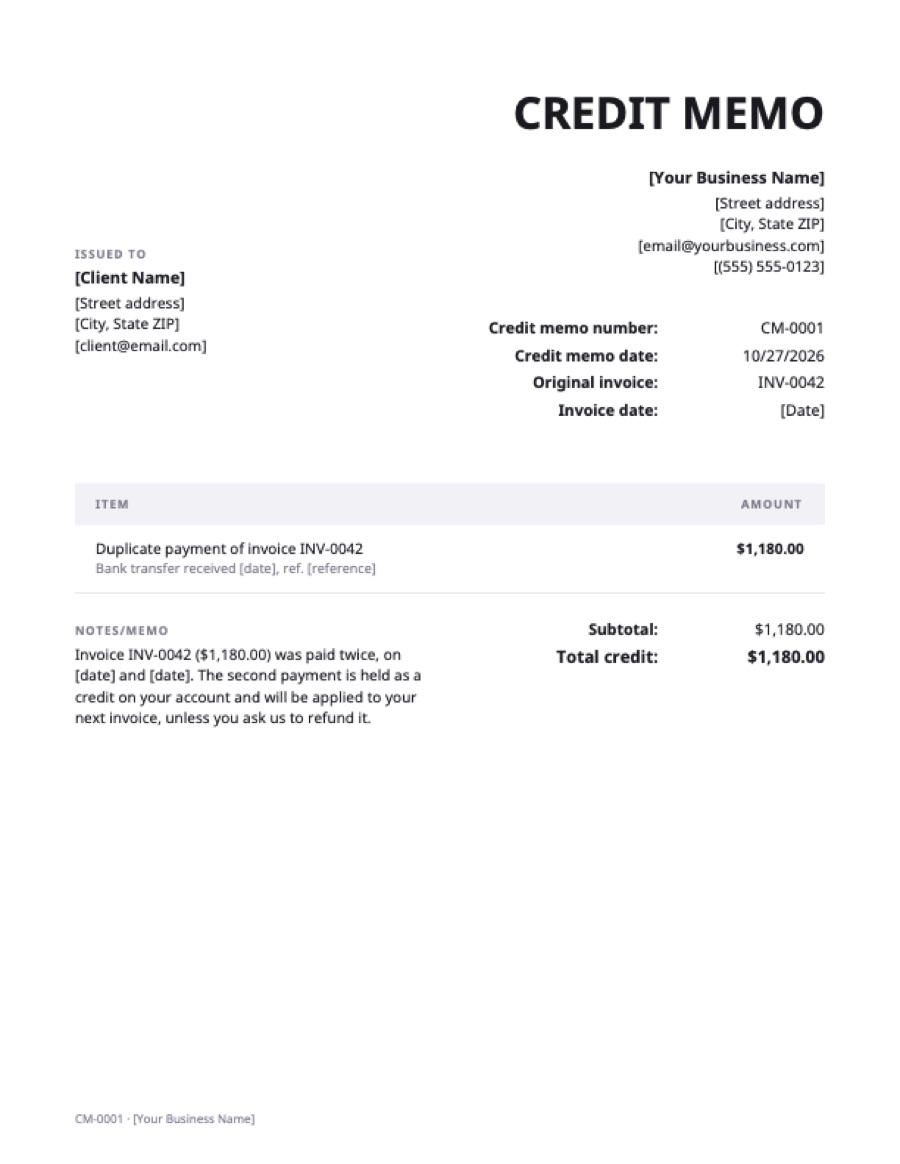
What’s on the credit memo for overpayment
Extra fields on this template: Original invoice, Invoice date.
| Item | Amount |
|---|---|
| Duplicate payment of invoice INV-0042Bank transfer received [date], ref. [reference] | $1,180.00 |
| Total credit | $1,180.00 |
Example prices in US dollars. Replace them with your own; in the generator, any currency works.
An overpayment isn’t a price change
Unlike a return or a discount, an overpayment doesn’t change the sale: the invoice was right, the customer just paid too much. So don’t credit any tax, and don’t reduce the invoice. The credit memo records the extra money as a balance you hold for the customer, and says what will happen to it.
In VAT and GST countries, a formal credit note is for changes to the sale itself. For an overpayment, a letter or statement showing the credit balance is enough, and this template works for that with the title changed to “Statement of credit”.
Refund it or apply it
- Ask the customer which they prefer, and write it on the memo.
- Applying it: show the credit as a payment line on the next invoice, quoting this memo’s number.
- Refunding it: pay it back the way it came, and note the date.
- Don’t sit on it. Unclaimed customer credits can eventually count as unclaimed property that some US states require you to report, so refund old balances.
Frequently asked questions
Do I need a credit memo for an overpayment?
It is good practice: it tells the customer you received the extra and what you will do with it, and gives your records a document to match the payment to.
Should sales tax be refunded on an overpayment?
No. Tax was charged correctly on the sale. The extra payment is simply money you owe back to the customer.
Can I keep an overpayment if the customer doesn’t ask for it?
No. It is the customer’s money. Apply it to their next invoice with their agreement or refund it.