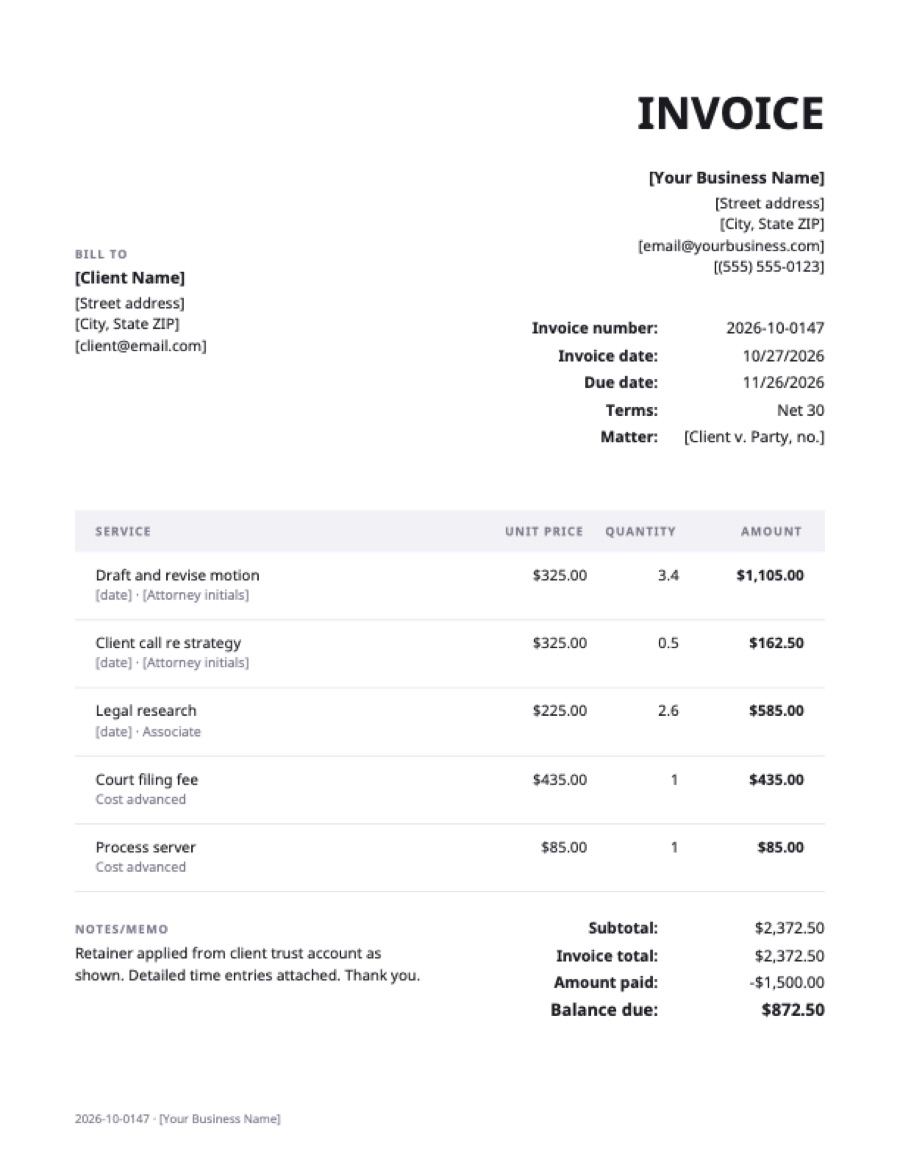
What’s on the lawyer invoice template
Extra fields on this template: Matter.
| Service | Qty | Rate | Amount |
|---|---|---|---|
| Draft and revise motion[date] · [Attorney initials] | 3.4 | $325.00 | $1,105.00 |
| Client call re strategy[date] · [Attorney initials] | 0.5 | $325.00 | $162.50 |
| Legal research[date] · Associate | 2.6 | $225.00 | $585.00 |
| Court filing feeCost advanced | 1 | $435.00 | $435.00 |
| Process serverCost advanced | 1 | $85.00 | $85.00 |
| Total | $2,372.50 | ||
| Amount paid | -$1,500.00 | ||
| Balance due | $872.50 | ||
Example prices in US dollars. Replace them with your own; in the generator, any currency works.
What to put on a legal invoice
- The client and the matter name or number.
- Time entries: date, timekeeper, a clear description and time, usually in tenths of an hour.
- Each timekeeper’s rate.
- Costs advanced (filing fees, court reporters, service) separately from fees.
- Retainer or trust funds applied, and the balance due.
- Flat fees, if the engagement uses them, named as in the engagement letter.
Retainers and trust accounts
Advance fees usually sit in a client trust account until earned. Professional conduct rules require you to keep them separate from your own money and to account to the client for them. The invoice is that accounting, so show each amount moved from trust to pay the bill. Your state bar’s rules decide the details, including what must be in the engagement letter.
Frequently asked questions
Why do lawyers bill in tenths of an hour?
Six-minute increments are the common convention for recording time. Whatever increment you use, state it in your engagement letter.
Should costs be billed separately from fees?
Yes. Clients and courts expect to see out-of-pocket costs such as filing fees apart from professional fees.
Are legal services taxed?
Legal services are exempt from sales tax in most states, though a few tax some professional services.