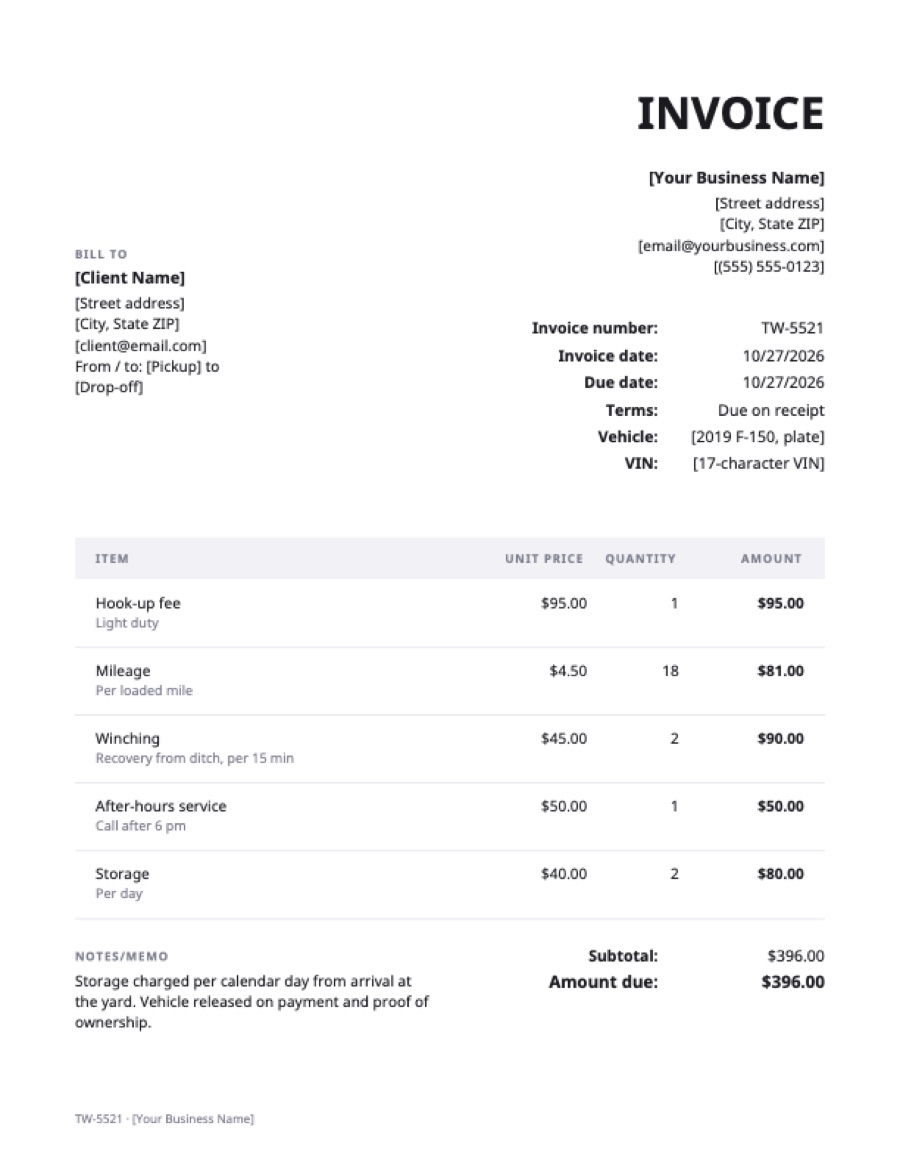
What’s on the towing invoice template
Extra fields on this template: Vehicle, VIN, From / to.
| Item | Qty | Rate | Amount |
|---|---|---|---|
| Hook-up feeLight duty | 1 | $95.00 | $95.00 |
| MileagePer loaded mile | 18 | $4.50 | $81.00 |
| WinchingRecovery from ditch, per 15 min | 2 | $45.00 | $90.00 |
| After-hours serviceCall after 6 pm | 1 | $50.00 | $50.00 |
| StoragePer day | 2 | $40.00 | $80.00 |
| Total | $396.00 | ||
Example prices in US dollars. Replace them with your own; in the generator, any currency works.
What to put on a towing invoice
- The vehicle: make, model, plate and VIN.
- Pickup and drop-off locations, and the time of the call.
- Hook-up fee and mileage.
- Extra work: winching, dollies, flatbed, waiting time.
- After-hours or holiday fees, and storage per day.
- Who called: the owner, a motor club, police or a property owner.
Rate rules for non-consent tows
Many states and cities cap what you can charge for police-ordered or private-property (non-consent) tows and storage, and require the rates to be posted or itemized. Check the rules where you operate and keep the invoice itemized to match them. Motor club jobs are usually billed to the club at its rates.
Frequently asked questions
How is towing mileage charged?
Usually per loaded mile, from pickup to drop-off, sometimes with some miles included in the hook-up fee.
When does storage start?
Most yards charge per calendar day from when the vehicle arrives. State it in the notes.
Who pays for a tow after an accident?
Usually the vehicle owner, who may claim it from their insurer. Itemized invoices make claims easier.