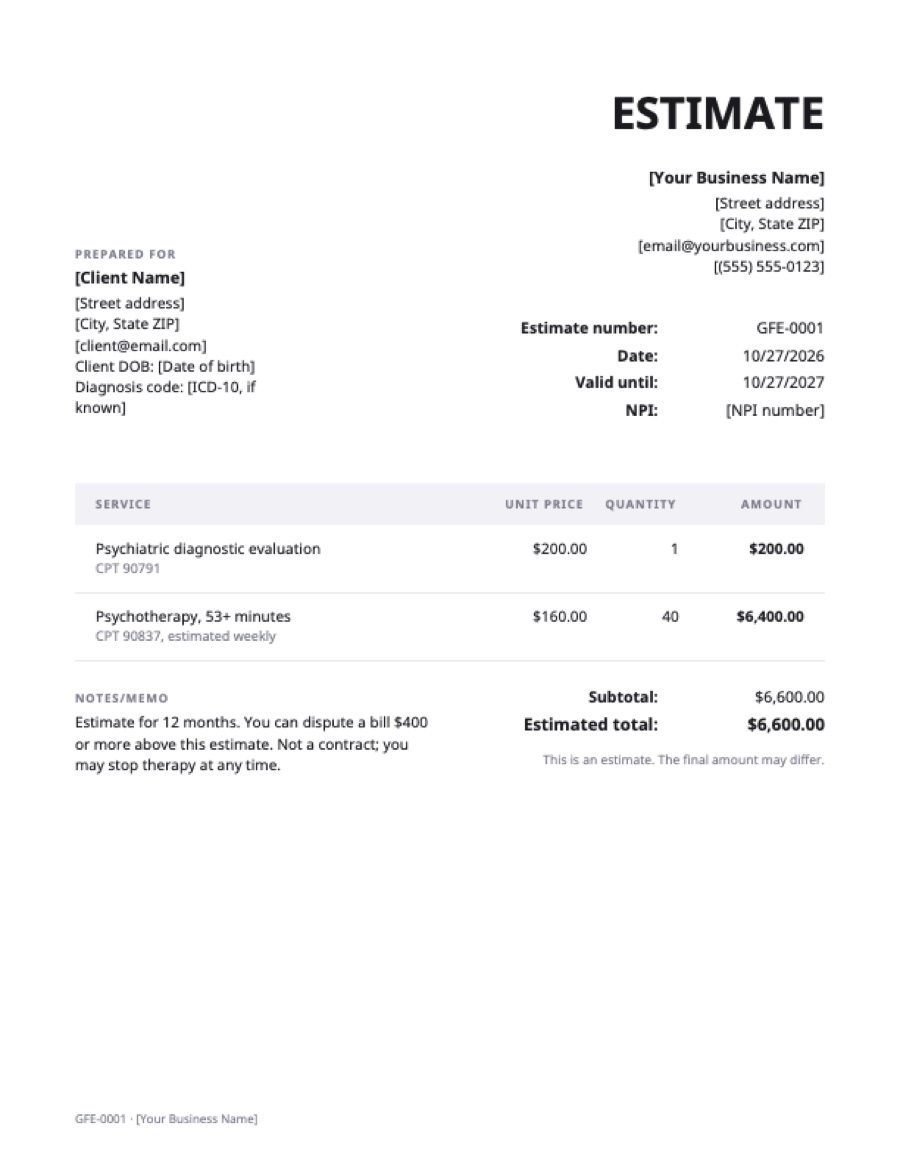
What’s on the good faith estimate template for therapists
Extra fields on this template: NPI, Client DOB, Diagnosis code.
| Service | Qty | Rate | Amount |
|---|---|---|---|
| Psychiatric diagnostic evaluationCPT 90791 | 1 | $200.00 | $200.00 |
| Psychotherapy, 53+ minutesCPT 90837, estimated weekly | 40 | $160.00 | $6,400.00 |
| Estimated total | $6,600.00 | ||
Example prices in US dollars. Replace them with your own; in the generator, any currency works.
Good faith estimates under the No Surprises Act
Since 2022, US health care providers, therapists included, must give uninsured and self-pay clients a good faith estimate of expected charges, when they schedule or on request. It should list the expected services with codes and fees, the provider’s name, NPI and tax ID, the location, the client’s name and date of birth, and the diagnosis code if known. For ongoing therapy, an estimate can cover up to 12 months.
The rules also require specific disclaimer text, including the client’s right to dispute a bill that is at least $400 more than the estimate. Use the wording from the government’s model notice in addition to this template; the notes here are a reminder, not the full notice. Check the current federal guidance at cms.gov/nosurprises.
Frequently asked questions
Who needs a good faith estimate?
Clients who are uninsured or not using insurance for the service.
How long can the estimate cover?
Up to 12 months; give a new one if services change.
What if the bill goes over?
Clients can dispute bills at least $400 above the estimate through the federal dispute process.